Welcome to the baker’s version of F*ck, Marry, Kill for any and all recipes! Here’s the lowdown on what tools to use when working with a certain type of batter and why.
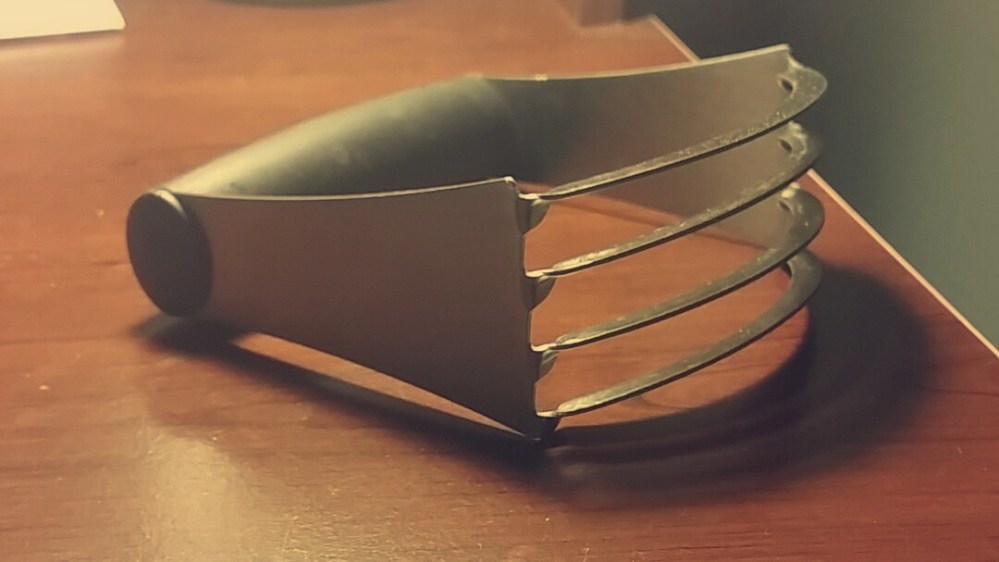
The pastry cutter— a.k.a. the brass knuckles of the baking world. Honestly, you could bruise more than batter in a fight brandishing a pair of these, but unfortunately, most competitive baking shows frown upon the combative use of baking tools.
Not as commonly used, this tool of choice nihilistically resists the thrall of even incorporation, leaving you with the unsatisfying, half-assed perfection of a lumpy batter. It does terribly what the proceeding tools do wonderfully– and that’s what’s great about it! When a batter is fully mixed or whipped, there is an even spread of air to make the end product more fluffy, or an uneven distribution to make it flakier and have a more complex texture. The pastry cutter traps pockets of air in a dry, coarse mixture of that clumps, crisps, and crumbles in the baking process.
Pastry cutters have the best results when used for drier batters, such as scones, biscuits, cornbreads, and even muffins– usually, anything with butter benefits a dense texture. And it definitely requires the most effort compared to the other options, but the consistency makes it worth it.
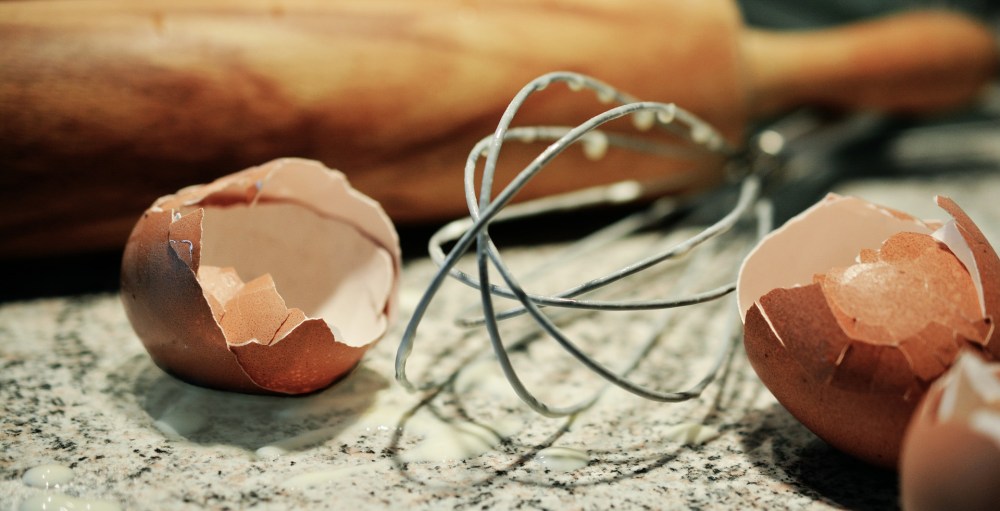
The whisk is a happy middle ground between the polarity of radical incorporation and chaotic clumping, perfect for either the novice or unsure baker. It’s the standard tool for mixing, a guaranteed household utensil (granted you cook anything at all), and a trusted alternative to the wooden spoon.
The openings of the whisk allow the mixture to more fully incorporate its ingredients, spreading more evenly than would a folding technique with a spatula. Because of this, the pockets of air are smaller and distributed throughout the batter in a nearly smooth consistency, making for a flatter, more compact end result. The versatility of a whisk is its best feature; you can really use it for whatever with varying degrees of difficulty depending on what it is you’re making and how thin you want the consistency to be. And you can generally gauge the batter by how much your hand hurts.
I suggest the whisk for wetter and thinner batters, if for just the sake of your wrist. Boxed cake mix, brownies, dessert loaves– basically anything with oil as the main source of fat and moisture to create a balance of textures.
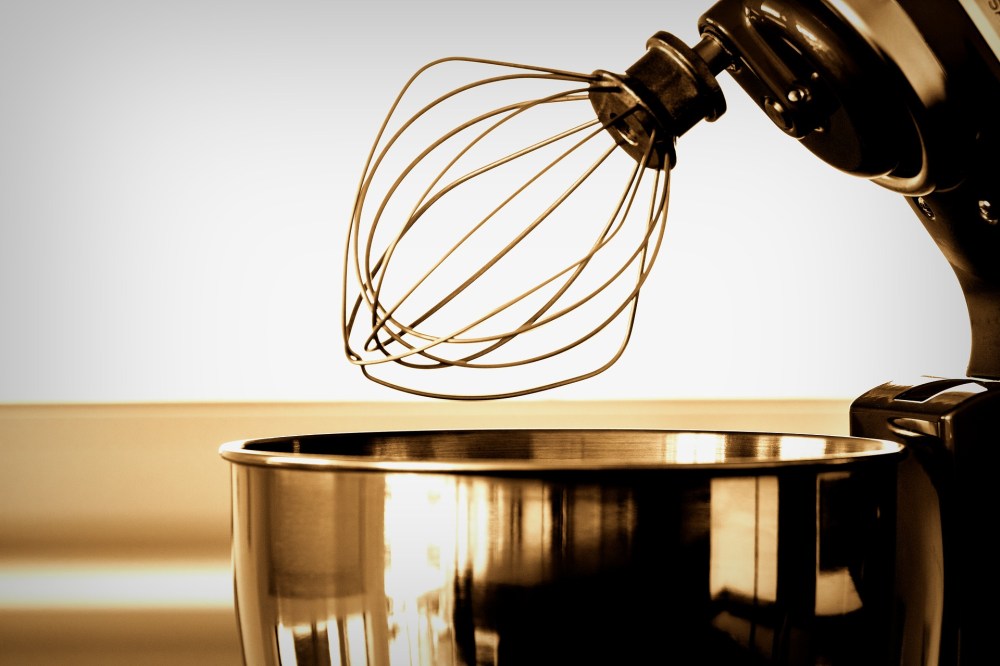
Hand-mixers are a Godsend to anyone who has actually cramped their hand from mixing before, let me tell you; it is not a proud injury to have as I was once a proud whisker, valuing equal parts tradition and pain in my craft, but pride isn’t convenient when you have a big order to fill.
The settings are a control freak’s fantasy too; you can get almost as inadequately incorporated as a pastry cutter or, contrarily, whip batter into a creamy, fluffy consistency that risks splitting the atomic particles in a nuclear event of turbo mixing. Your choice. Although it’s not quite as standard of a baking tool, it’s somewhat a staple for professional-quality goods because of how fully and quickly it incorporates ingredients to perfection. Plus the whipping of batter contributes to the airy outcome of whatever it is you’re baking due to the magnanimity of air pockets throughout the mixture.
To make a dense thing less so, hand-mixing is your best bet. It works wonderfully with cookies, homemade cakes and cupcakes, icing and whipped cream (obviously). It’s just so much less work for such a great outcome.
And there you have it! Maybe I spend too much time exciting myself over the different ways to prepare a mixture, and their effects on the end product, but I appreciate technique and tact, however nuanced, in all that I do.
 Baking Blog